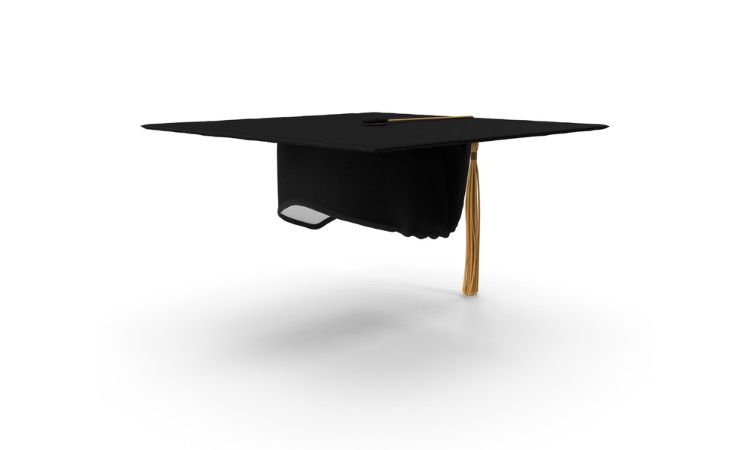
Anyone who’s sat through a graduation ceremony holding their chin at a strange angle, silently praying the cap won’t slide backward mid-handshake, already knows the problem. Graduation caps weren’t really built with hair in mind. They’re flat, light, and held on by little more than an elastic band and a couple of bobby pins, which works fine for some hairstyles and falls apart for others. Curls, braids, locs, twists, and fuller styles can push the cap out of position within minutes.
A graduation cap headband is one fix for that. It’s a support accessory that fits inside the cap and gives it something easier to grip, though the design varies by brand. It won’t fix a cap that’s the wrong size, and every school sets its own rules about what’s allowed on stage. This guide covers how the accessory works, how to install it, how to wear it with any hairstyle, and where it fits in a graduate’s graduation regalia.
What Is a Graduation Cap Headband?
Before getting into fit and installation, it helps to know what this product actually is, since the term covers more than one design.
A graduation cap headband is a support accessory used with a graduation cap to help it stay in place and sit comfortably on the head. Some versions sit inside the mortarboard and connect directly to a headband. Others use small rings or inserts that snap together, and some rely on an adhesive-backed piece of felt or foam instead. The goal is the same: give the cap something stable to grip so it doesn’t slide, tilt, or lift off during the ceremony.
How Does a Graduation Cap Headband Work?
Most designs follow a similar basic idea, even though the parts look different from brand to brand.
- An insert or attachment piece goes inside the cap first
- The headband then provides contact all the way around the head
- Together, this combination reduces unwanted movement of the cap
- The exact installation steps depend entirely on the specific product a graduate buys
Graduation Cap Headband vs. Graduation Headband
These terms get used almost interchangeably online, which makes searching for the right product a little confusing. Here’s how they actually break down:
| Term | What It Usually Means |
| Graduation cap headband | A support accessory used with the graduation cap |
| Grad cap headband | A shorter, informal name for the same type of accessory |
| Graduation headband | Can refer to a cap-support headband, or simply a decorative headband worn on graduation day |
| Graduation cap insert | The support piece placed inside the cap, sometimes sold separately |
Diploma covers, tassels, cords, and caps all fall under the broader umbrella of graduation accessories, and this headband is really just one more item in that category, built to solve one specific fit problem.
Does a Graduation Cap Headband Keep the Cap Secure?
This is usually the first question anyone asks before spending money on the accessory, and it deserves a direct answer.
A graduation cap headband can provide extra support and cut down on movement, but only when it’s installed correctly and fitted to the graduate’s head. It cannot correct a cap that’s the wrong size or one that’s already positioned wrong before the headband goes in. Several factors affect how secure the final setup feels: the cap’s size, where it sits on the head, how snug the headband fits, the hairstyle under it, how carefully the insert was installed, and how much movement happens during the walk across the stage.
When a Headband Can Be Useful
- The cap keeps moving while walking or turning the head
- Hair makes it hard to get the cap into the right position
- A fuller hairstyle needs more support than pins alone can give
- Bobby pins keep slipping out or aren’t holding well enough
- The graduate wants an alternative to relying only on pins
What a Headband Cannot Fix
- A cap that’s the wrong size for the graduate’s head
- A cap sitting too high because of hair volume under it
- Incorrect installation of the insert itself
- A headband that’s too loose or too tight to hold its position
- School rules that restrict certain accessories or decorations
It’s worth being honest here: no graduation cap headband works equally well with every hairstyle. Some products handle fuller styles better than others, so it pays to read reviews and product details closely before buying.
How to Put a Graduation Cap Headband On?
Installation steps vary by brand, so the process below covers the general flow most products follow rather than instructions tied to one specific item. Some systems use a small insert with connecting rings, while others attach a headband to the inside of the cap using an adhesive-backed piece.
Step 1: Check the Cap and Headband
First, locate the front of the cap, as most caps have one point that should be in front. Be sure you have all of the parts that should be in the package and compare the headband and insert pieces to the instructions that came with the product before beginning.
Step 2: Install the Cap Insert
This step looks different depending on the product. Some systems use a larger ring paired with a smaller one that clicks together inside the cap. Others rely on a felt attachment that presses into place. Following the specific product’s instructions matters more than applying one general method to every headband, since a technique that works for one brand may not work at all for another.
Step 3: Attach the Headband
When the insert is in place, connect the headband to it. Make sure the connection feels secure and not loose, and that the band itself sits comfortably around the head before moving on.
Step 4: Put the Cap On
Getting the cap positioned correctly matters just as much as the headband itself. According to Arizona State University’s cap and gown guide, the cap should sit with one point facing forward, about one inch above the eyebrows, with the mortarboard staying level rather than tilted forward, back, or to one side.
Step 5: Check the Fit
Before calling it done, test the whole setup:
- Turn the head from side to side
- Walk a short distance
- Sit down and stand back up
- Check the headband for any spots of pressure
- Confirm the cap is still sitting level
How to Wear a Graduation Cap With Different Hairstyles?
Hair is really the whole reason this accessory exists, so here’s how different styles interact with a cap and where a headband actually helps.
Curly and Natural Hair
Volume changes everything about how a cap sits. Rather than forcing the cap down over curls, test it with the exact style planned for graduation day well before the event. A properly sized headband may add support without flattening the style or creating discomfort.
Braids and Locs
The height and placement of braids or locs affect where the cap can realistically sit. Gently place the cap around the style rather than forcing it into place, and check that the headband is not causing pressure points anywhere. Test the whole setup ahead of time, and you’ll find issues before they happen on stage.
Twists, Weaves, and Fuller Hairstyles
Fuller styles can change how the mortarboard sits on top of the head, sometimes more than graduates expect. An insert or headband may help hold the cap steady, but compatibility really does vary by product, so it’s worth checking reviews from people with similar hair before buying.
Straight Hair
Straight hair usually causes fewer fitting issues overall, since there’s less volume to work around. A headband can still help if the cap keeps sliding, but getting the correct cap size remains the most important factor either way.
Head Coverings
Graduates planning to wear a head covering along with academic regalia or a headband accessory should check their institution’s specific commencement rules first, since policies on this vary quite a bit between schools.
Graduation Cap Headband vs. Bobby Pins
Both options address the same basic issue in different ways, and the best choice usually depends on how much support a particular cap and hairstyle actually need.
| Factor | Graduation Cap Headband | Bobby Pins |
| Main purpose | Adds extra support to the cap | Secures hair or the cap itself |
| Setup | Depends on the headband’s design | Usually quick |
| Hair considerations | Varies by product | Varies by hairstyle |
| Reusable | Often, depending on the design | Usually reusable |
| Best use case | When extra cap support is needed | When simple securing is enough |
When a Headband May Help
- The cap moves during normal activity like walking or turning
- The hairstyle makes it hard to position the cap correctly
- More support is needed than pins alone can provide
When Bobby Pins May Be Enough
- The cap already fits well without extra help
- The hairstyle allows for easy, secure pinning
- The school’s rules specifically permit pins or clips
School policies can differ quite a bit from one institution to the next, the same way rules around graduation honor cords and other accessories vary, so it’s worth checking ceremony instructions before relying on either method.
What Is Grad Cap Remix?
If you search for graduation cap headbands, you’ll probably see this product name, so it’s worth explaining what it is.
Grad Cap Remix is a specific graduation cap insert and headband system sold by CapCreationsInc, while “graduation cap headband” is the general term for this entire category. Every Grad Cap Remix is a graduation cap headband, but not every graduation cap headband is a Grad Cap Remix.
How Grad Cap Remix Works
Based on the manufacturer’s own product listings, the system includes:
- A three-piece insert made of an outer ring, inner ring, and headband
- A design built to fit standard-size graduation caps
- An interchangeable headband that can be swapped for another one 10 centimeters or smaller
- A design intended to work with a range of hair types and styles
- An installation process specific to this product, separate from other brands
These are the manufacturer’s own claims, worth noting since results can vary by head size, hairstyle, and how carefully the piece is installed.
How to Put a Grad Cap On Correctly
Getting the cap itself right matters more than any accessory added on top of it, so here’s the short version.
- Find the front of the cap, usually marked by one point
- Center that front point with the middle of the forehead
- Position it about one inch above the eyebrows
- Keep the mortarboard level rather than tilted
- Center the cap evenly on the head
- Check the fit before walking or moving around much
The tassel attached to the cap has its own placement rules that can also vary by ceremony, which the graduation tassel guide covers in more detail.
Do You Need a Graduation Cap Headband?
Not every graduate needs this accessory, and it’s worth thinking through the actual problem before buying one.
A headband may be useful if:
- The cap moves easily on its own
- The hairstyle makes positioning the cap difficult
- Extra support feels necessary
- The graduate wants an option beyond relying only on pins
A headband may not be necessary if:
- The cap already fits securely without help
- The hairstyle doesn’t interfere with the cap at all
- The school’s recommended method already works fine
- There’s no noticeable movement during a test run
Start with the cap’s actual fit and correct placement first. Add a support accessory only if it solves a real problem, rather than buying one just because it showed up in search results.
Test the Graduation Cap Before the Ceremony
This step gets skipped more often than it should, and it’s one of the easiest ways to avoid a stressful morning before the ceremony.
Testing the complete setup with the exact hairstyle planned for graduation day catches problems while there’s still time to fix them. A quick pre-ceremony test should include:
- Installing the headband
- Styling hair the same way planned for the actual day
- Putting the cap on over that style
- Walking around for a few minutes
- Sitting down and standing back up
- Turning the head in different directions
- Taking a few photos to check how it looks
- Checking overall comfort
- Adjusting anything that feels off before the big day
This same logic applies to the rest of a graduation outfit, since trying everything on together ahead of time usually reveals small issues that are much easier to fix at home than in line before the ceremony starts.
Common Graduation Cap Headband Mistakes
A few small mistakes come up again and again, and most are easy to avoid once a graduate knows what to watch for.
- Choosing the wrong cap size. A headband can’t make up for a cap that simply doesn’t fit.
- Installing the accessory without reading the instructions. Different headband systems attach in different ways, and guessing rarely works well.
- Making the headband too tight. Extra pressure gets uncomfortable fast, especially over a few hours of standing and sitting.
- Positioning the cap too low. The cap should fit properly on the head and not be pulled over a hairdo.
- Trying the full setup for the first time on graduation day. Testing in advance allows you to identify problems early, so you can address them.
FAQs
What is a graduation cap headband?
It is a supportive accessory that fits inside the graduation hat to help keep it in place and feel comfortable throughout the ceremony. Most versions include an insert piece connected to a headband worn around the head.
How do you attach a headband to a graduation cap?
That depends on the product. Some use an insert with small connecting rings; others use an adhesive-backed piece instead. The safest bet is always to follow that specific product’s instructions rather than guessing.
Does a graduation cap headband keep the cap from falling off?
It helps, but it’s not a guarantee. A headband adds support and cuts down on movement, though a cap that’s the wrong size or badly placed can still slip. Getting the fit right matters more than any accessory.
Can you wear a graduation cap headband with curly hair?
Plenty of products are made with fuller and natural hairstyles in mind, but not everyone performs the same way. Trying the whole setup with the actual hairstyle before graduation day is the only real way to know it’ll work.